Where the Float Industry Is Heading: Key Trends Shaping the Future of Wellness
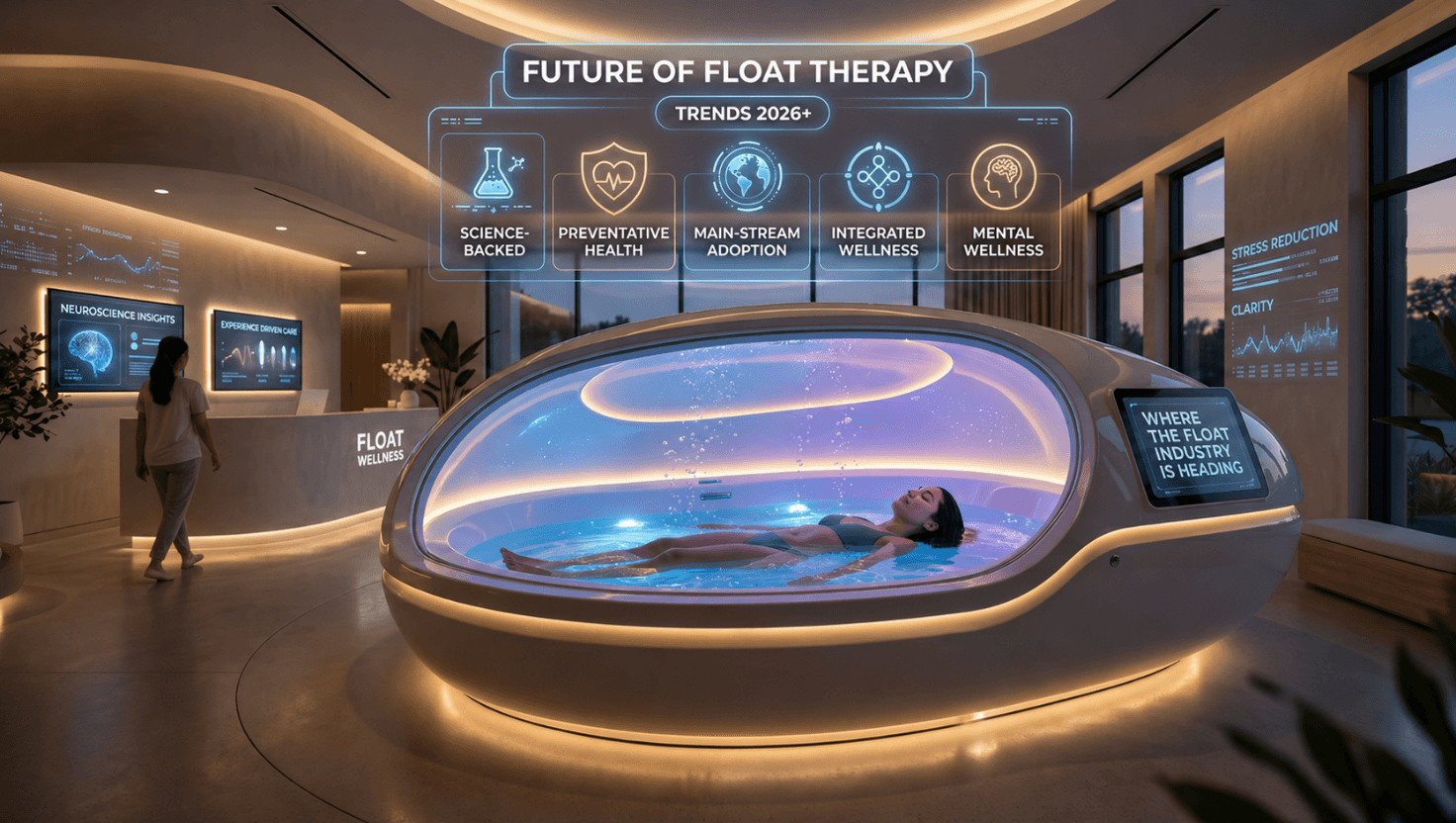
The Rise of Evidence-Based Wellness
One of the most significant shifts is the move toward evidence-based wellness. Float therapy (also known as flotation-REST) is gaining recognition as a non-pharmacological intervention for stress, anxiety, and pain.
Research shows float therapy can:
Reduce stress and anxiety
Improve sleep quality
Support pain management
Emerging neuroscience research also suggests floating alters brain activity linked to self-awareness and stress regulation, reinforcing its role in mental health support.
What this means for the future:
Float therapy is increasingly positioned alongside clinical and allied health services—not just as a luxury, but as a therapeutic tool.
Integration into Preventive Health & Healthcare Systems
Healthcare systems globally are shifting toward preventative and lifestyle-based interventions. Float therapy fits this model by offering:
Drug-free stress management
Nervous system regulation
Support for chronic conditions
As research expands, float therapy is being explored as a complementary treatment in areas such as:
Anxiety disorders
Chronic pain
Trauma and PTSD
Future direction:
Greater collaboration between float centres and healthcare professionals, including psychologists, physiotherapists, and integrative medicine practitioners.
The Expansion of Multi-Modal Wellness Hubs
The future of the float industry is not standalone—it’s integrated.
Float centres are increasingly evolving into holistic wellness hubs, combining:
Infrared sauna
Red light therapy
Breathwork and mindfulness
Recovery services
This aligns with consumer demand for “wellness stacking”—combining multiple modalities for greater impact.
Why this matters:
Consumers are no longer looking for a single service—they want complete wellness ecosystems.
Nervous System Regulation Becomes Mainstream
A major trend shaping the future is the growing awareness of the nervous system’s role in health.
Float therapy directly supports:
Parasympathetic activation (rest and digest state)
Reduction in sensory overload
Deep relaxation and recovery
Studies show high levels of reported relaxation (over 90%) and significant stress reduction among users.
Future implication:
Float therapy is likely to become a go-to modality for nervous system regulation, alongside meditation and breathwork.
Technology-Enhanced Float Experiences
Innovation is reshaping the float experience. Future-focused centres are integrating:
Guided audio or meditation programs
Customisable lighting environments
App-based tracking and bookings
Some emerging concepts include:
Biofeedback integration
Personalised float protocols
Data-driven wellness plans
Where this is heading:
Float therapy is moving toward a tech-enabled, personalised wellness experience.
Growth in Mental Health & Corporate Wellness
Workplace stress and burnout continue to rise, driving demand for scalable solutions.
Float therapy is increasingly being adopted in:
Corporate wellness programs
Executive performance routines
Mental health support strategies
Its ability to improve clarity, reduce stress, and support recovery makes it highly relevant for modern workplaces.
Consumer Behaviour: From Luxury to Essential
Perhaps the biggest shift is how consumers view wellness.
Consumers are now:
Investing in preventative health
Prioritising mental wellbeing
Seeking regular, repeatable experiences
Float therapy is transitioning from an occasional indulgence to a routine self-care practice.
The Role of Research & Industry Credibility
While the industry is growing, ongoing research remains critical.
Some studies show strong short-term benefits, while also highlighting the need for more long-term data and larger trials.
Future success of the industry depends on:
Continued clinical research
Standardisation of practices
Stronger industry collaboration
Future Outlook: What Comes Next
Looking ahead, the float industry is expected to evolve through:
Medical integration: Closer ties with healthcare and clinical research
Regional expansion: Growth beyond major cities
Personalisation: Tailored float experiences and programs
Education: Greater public awareness and understanding
Float therapy is uniquely positioned at the intersection of:
Science
Mental health
Recovery
Preventative care
Final Thoughts
The future of the float industry is clear—it is moving toward mainstream adoption, scientific credibility, and integrated wellness experiences.
As consumer demand for mental clarity, stress reduction, and preventative health continues to rise, float therapy is no longer just a trend—it is becoming a foundational pillar of modern wellness.
References
Global Wellness Institute. Flotation Therapy Evidence & Research.
https://globalwellnessinstitute.orgNational Center for Biotechnology Information. Floatation Therapy for Mental Health Conditions.
https://www.ncbi.nlm.nih.govNature Scientific Reports. Neuroscience Effects of Floatation-REST (2024).
Cleveland Clinic. Float Therapy Benefits and Sleep Research.
Experiences of Floatation-REST Users 2025. medRxiv.