Float Therapy for Athletes: Why Elite Performers Are Turning to Floatation REST for Recovery and Peak Performance
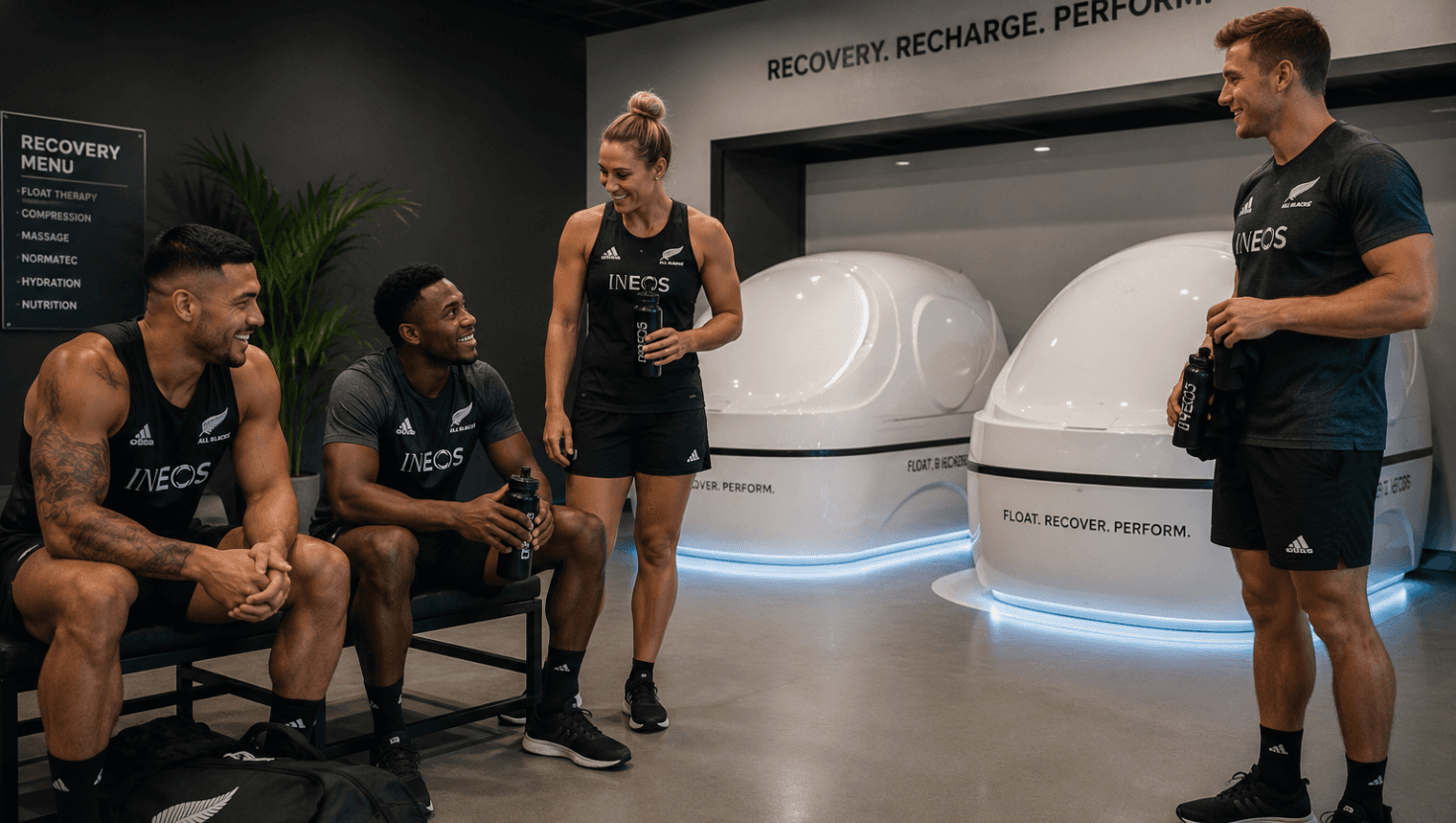
Elite athletes are always searching for an advantage. Whether it's recovering faster after competition, improving mental resilience, or staying injury-free throughout a demanding season, recovery has become just as important as training itself.
Across professional sport, one recovery method continues to gain attention: float therapy, also known as Floatation REST (Restricted Environmental Stimulation Therapy).
From soccer & Football stars, NBA champions, to Olympic gold medallists and UFC fighters, athletes around the world are incorporating float therapy into their performance routines. With the FIFA World Cup demanding extraordinary physical and mental endurance from players, recovery strategies such as float therapy have become increasingly relevant for elite footballers competing at the highest level.
What is Float Therapy?
Float therapy involves lying effortlessly in a specially designed float tank or pod filled with warm water containing approximately 500 kg of pharmaceutical-grade Epsom salt (magnesium sulphate). The high salt concentration allows the body to float effortlessly, removing almost all pressure from muscles, joints, and the spine.
The environment is quiet, dark, and free from external distractions, allowing the body and mind to enter an exceptionally deep state of relaxation.
This combination of physical weightlessness and reduced sensory input enables athletes to recover both physically and mentally.
Why Elite Athletes Use Float Therapy
Modern sport is demanding. Athletes train harder, compete more frequently and travel further than ever before.
Float therapy provides benefits across several key performance areas:
Faster Physical Recovery
During floating, the body is completely supported by the buoyant Epsom salt solution, removing gravitational pressure from muscles and joints.
This helps athletes recover after:
Intense training sessions
High-impact competition
Heavy travel schedules
Strength and conditioning programs
Many athletes report reduced muscle soreness, improved mobility and better quality sleep following float sessions.
Supporting Injury Recovery
Elite sport places enormous stress on tendons, ligaments, and muscles.
The deep relaxation experienced during floating helps reduce physical tension while allowing athletes to rest without placing additional load on injured tissues.
Many athletes include float therapy during rehabilitation programs to complement physiotherapy and strength work.
Mental Recovery
Professional sport is mentally exhausting.
Float therapy provides a distraction-free environment where athletes can:
Calm the nervous system
Reduce stress
Improve focus
Enhance concentration
Recover from emotional fatigue
This mental reset is often considered just as valuable as the physical recovery.
Visualisation and Performance Preparation
Many elite athletes use float sessions for mental rehearsal.
Without external distractions, athletes can visualise:
Technical execution
Tactical situations
Competition routines
Successful performances
Sports psychologists have long recognised visualisation as an effective performance tool, and float therapy offers an ideal environment for this practice.
Float Therapy in Professional Soccer (Football)
Soccer places enormous demands on the body.
Professional players regularly cover 10–13 kilometres during a single match while sprinting, changing direction and absorbing physical contact.
As international tournaments such as the FIFA World Cup become increasingly competitive, recovery between matches is critical.
Many professional and competitive players use float therapy as part of their recovery strategy.
Wayne Rooney
Former Manchester United and England captain Wayne Rooney is perhaps the best-known soccer advocate for float therapy.
Rooney famously installed a commercial float tank in his own home and reportedly spent up to 10 hours each week floating.
He has credited float therapy with helping him:
Recover from muscle injuries faster
Reduce anxiety
Stay mentally refreshed
Extend his playing longevity
St George's Park
England's National Football Centre, St George's Park, incorporated floatation pods into its athlete recovery facilities.
These recovery suites were introduced to help England's national teams optimise physical recovery and maintain high performance throughout training camps and tournaments.
Why Athletes Float
Professional athletes commonly use float therapy for:
Muscle Recovery
The Epsom salt solution supports total body weight, relieving pressure from:
Knees
Ankles
Hips
Lower back
Hamstrings
Calves
Injury Management
The deep relaxation experienced during floating assists recovery by helping reduce muscle tension and supporting the body's natural healing processes after demanding 90-minute matches.
Mental Preparation
Elite player’s also use float therapy to:
Visualise matches
Improve confidence
Reduce performance anxiety
Enhance concentration before major competitions
Float Therapy across All Professional Sports
Although soccer has embraced floating, it is now used across numerous professional sports.
Basketball (NBA)
Stephen Curry
Few athletes have helped popularise float therapy more than NBA superstar Stephen Curry.
The Golden State Warriors legend has openly discussed using regular 90-minute float sessions to:
Recover during long NBA seasons
Manage sensory overload
Improve mental focus
Maintain emotional balance
His floating routine has even featured in major media campaigns promoting healthy recovery practices.
Harrison Barnes
Former teammate Harrison Barnes also adopted float therapy while playing alongside Curry.
Like many NBA players, Barnes used commercial float centres and team-provided recovery facilities to combat travel fatigue and the demands of an 82-game season.
American Football (NFL)
Tom Brady
Seven-time Super Bowl champion Tom Brady is renowned for his commitment to recovery.
As part of his TB12 performance philosophy, Brady purchased a commercial-grade floatation tank for his home.
He has used float therapy to:
Reduce cortisol
Improve recovery
Support joint health
Extend his professional career well into his 40s
Professional Team Integration
Entire professional sporting organisations have integrated float therapy into their recovery programs.
Examples include:
New England Patriots (NFL)
Chicago Cubs (MLB)
Players can access float tanks immediately after training or competition as part of structured recovery protocols.
Olympic Athletes
Michael Phelps
The most decorated Olympian in history incorporated float therapy into his training to support:
Meditation
Stress management
Mental clarity
Emotional wellbeing
Carl Lewis
Olympic legend Carl Lewis was an early adopter of float therapy.
He famously practised visualising his long jumps while floating, helping pioneer mental rehearsal techniques in elite sport.
Jade Johnson and Phillips Idowu
British Olympic athletes Jade Johnson and Phillips Idowu have both spoken about using float tanks to develop the combination of physical relaxation and mental clarity required for world-class performance.
Combat Sports
Pat Healy
Former UFC and Strikeforce fighter Pat Healy regularly floated before competition.
For combat athletes, float therapy can help:
Ease muscle tension
Reduce pre-fight anxiety
Promote relaxation during weight-cut periods
Improve mental composure before competition
Australian Rules Football
Float therapy has also become increasingly popular within Australian sport.
Teams, including the Carlton Football Club, have incorporated floatation into athlete recovery strategies, with an emphasis on nervous system recovery, improved sleep quality and overall player wellbeing.
The Science Behind Athletic Recovery
One reason athletes value float therapy is its effect on the parasympathetic nervous system, commonly known as the body's "rest and digest" mode.
During a float session, many people experience:
Lower heart rate
Reduced blood pressure
Decreased cortisol (the primary stress hormone)
Deep muscular relaxation
For athletes who constantly train at high intensity, activating the parasympathetic nervous system provides an important counterbalance to the demands of elite competition.
International athletes also report that float therapy can help minimise the effects of jet lag, making it particularly valuable during overseas competitions such as the FIFA World Cup, Olympic Games and international tours.
Is Float Therapy Only for Elite Athletes?
Absolutely not.
Although many professional athletes use float therapy, its benefits extend to anyone participating in sports or regular physical activity.
Recreational athletes, runners, cyclists, swimmers, triathletes, CrossFit participants, and weekend footballers all use float therapy to support recovery, manage stress, and improve overall wellbeing.
Whether preparing for your next competition or simply recovering after a demanding week of training, float therapy offers a natural, drug-free recovery option.
Final Thoughts
As sport continues to evolve, recovery is becoming one of the greatest competitive advantages available to athletes.
From Wayne Rooney, Stephen Curry, Tom Brady, and Michael Phelps to national football programs and professional sporting clubs, float therapy has become an increasingly recognised recovery strategy for those striving to perform at their best.
With demanding tournaments such as the FIFA World Cup placing extraordinary physical and mental pressure on players, recovery methods that support both body and mind are more important than ever.
Float therapy offers a unique combination of physical relief, mental clarity, and deep relaxation that can complement an athlete's broader training and recovery program.
Whether you're an elite professional or simply passionate about your sport, float therapy may help you recover smarter, train harder, and perform at your best.
References
Fine, T. H., & Turner, J. W. (1985). The effects of brief restricted environmental stimulation therapy in the treatment of essential hypertension, graduate stress and burnout.
Feinstein, J. S., Khalsa, S. S., Yeh, H. W., et al. (2018). Examining the short-term anxiolytic and antidepressant effect of Floatation-REST. PLOS ONE.
Van Dierendonck, D., & Te Nijenhuis, J. (2005). Flotation Restricted Environmental Stimulation Therapy (REST): A Meta-Analysis. Psychology & Health.
Kaiser Permanente. Stephen Curry discusses float therapy and mindfulness.
English Football Association. St George's Park National Football Centre.
Various published interviews and media reports featuring Wayne Rooney, Tom Brady, Michael Phelps, Carl Lewis, Harrison Barnes, Jade Johnson, Phillips Idowu and Pat Healy discussing their use of float therapy and recovery practices.